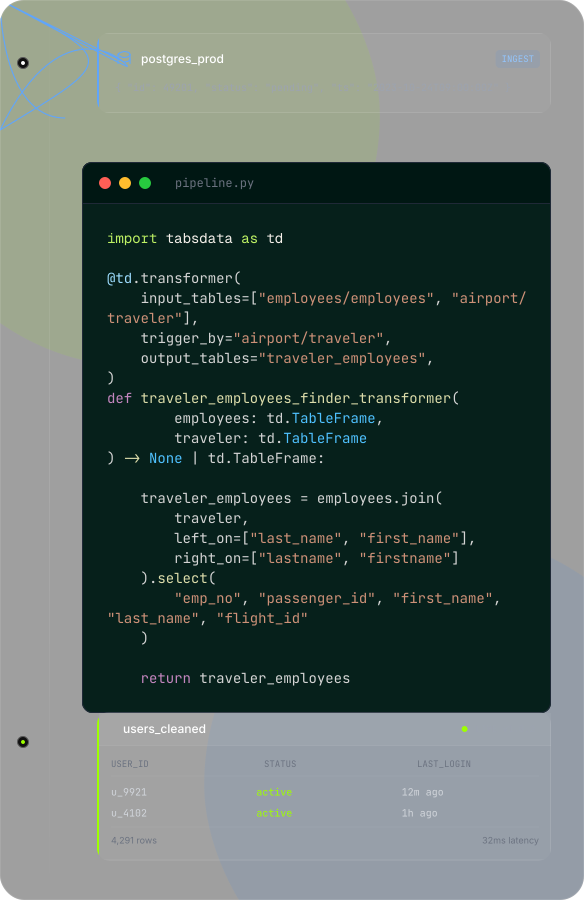
Declarative DataOps Solutions for Reliable, Automated Dataflows
Traditional DataOps relies on manually orchestrated pipelines that become fragile as data systems grow more real-time, interconnected, and business-critical. Schedulers, hand-maintained DAGs, and brittle jobs introduce operational risk, slow recovery, and constant maintenance.
Tabsdata introduces a Declarative DataOps model where teams define what their data should look like, and the system manages how it updates. Dataflows propagate deterministically, dependencies are handled automatically, and operational complexity is removed from day-to-day engineering.

Why Orchestration-Heavy DataOps Breaks at Scale

Pipeline-based DataOps was designed for batch processing and isolated workloads. As organizations push toward real-time ETL, shared tables, and AI-driven systems, this model struggles to keep up.

Each new pipeline increases coordination.
Each change expands the blast radius.
Each backfill becomes a high-risk operation.
This is not a tooling issue. It is a limitation of imperative, step-by-step orchestration.
What Declarative DataOps Changes
Declarative DataOps shifts DataOps from execution-centric pipelines to outcome-driven dataflows.
Dependency graphs still exist, but they are derived, managed, and kept consistent by the system, not authored or debugged by humans.
This results in dataflows that are easier to reason about, safer to operate, and far more resilient over time.

Teams define datasets, transformations, and dependencies

The system computes and maintains the dependency graph automatically

Updates propagate deterministically as new tables are published
How Tabsdata Implements Declarative DataOps
Tabsdata is built on a Pub/Sub for Tables architecture. Each table publishes changes as immutable versions. Downstream tables subscribe declaratively. When upstream data changes, dependent tables update automatically.
Deterministic propagation across environments
A continuously accurate dependency graph
There are no schedules to manage, no trigger chains to debug, and no orchestration logic to maintain.
Reprocessing Without Backfills
In traditional DataOps systems, fixing logic or handling late-arriving data requires manual backfills and careful coordination across pipelines.

Corrections trigger declarative recomputation

Affected tables update deterministically

Historical versions remain available via time travel
Reprocessing becomes routine, predictable, and safe, rather than a source of outages and lost trust.



Where Declarative DataOps Delivers Immediate Value


Real-time ETL and operational analytics

AI and ML feature pipelines

Fraud detection, logistics, and alerting systems

Legacy ETL modernization without disruption

Compliance and audit-sensitive data environments
Tabsdata as the Foundation for Modern DataOps
Tabsdata is not an orchestration tool layered on top of pipelines. It is the core DataOps foundation that replaces pipeline-centric thinking altogether.
By unifying ingestion, transformation, propagation, lineage, and governance in a single declarative system, Tabsdata allows data teams to scale real-time workloads without scaling operational burden.
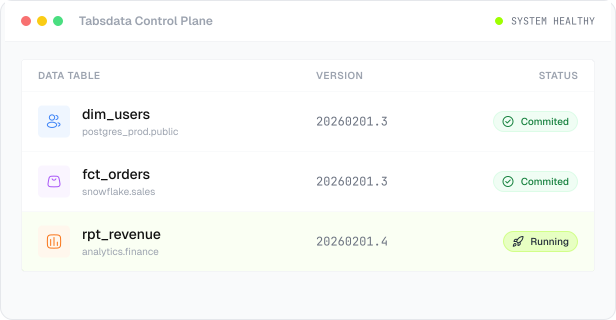
Start Automating DataOps with Tabsdata
Declarative DataOps removes the coordination, orchestration, and fragility that slow data teams down. See how Tabsdata delivers self-updating, deterministic dataflows in production.
Frequently asked questions
Everything you need to know about Declaritive DataOps
Still have questions?
Can’t find the answer you’re looking for? Please chat to our friendly team.