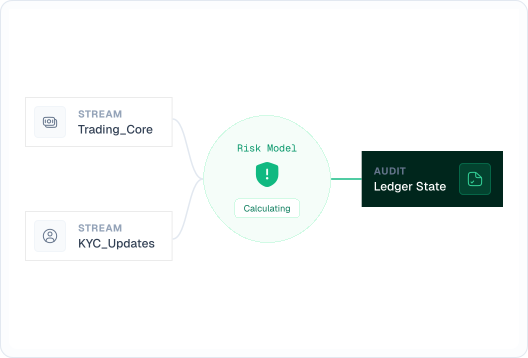
When financial dataflows execute deterministically, many of the failure modes that plague real-time systems simply disappear.
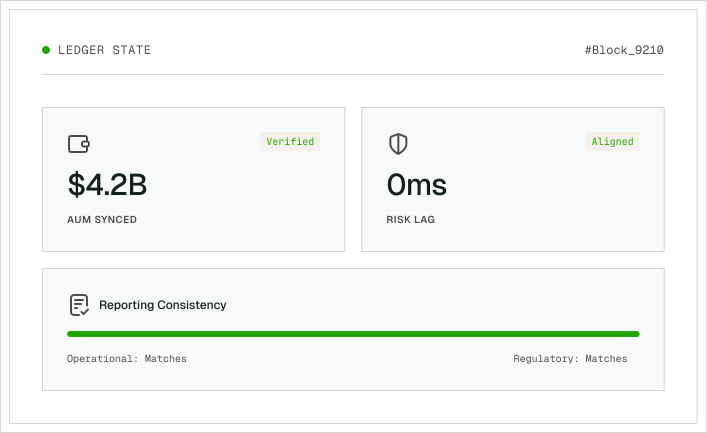
Every published dataset represents a complete, immutable state rather than a partial update in transit. Downstream systems receive consistent views of data, eliminating reconciliation logic between risk, fraud, reporting, and analytics environments.
Because execution order is derived from explicit dependencies, data propagation becomes predictable and explainable. Teams no longer need compensating controls to account for late-arriving data, reprocessing errors, or divergent pipeline behaviour.
Most importantly, historical states can always be reproduced exactly. Audits, investigations, and regulatory reviews rely on execution history rather than manual reconstruction, even as systems evolve and data volumes grow.
Real-time data stops being a source of operational risk and becomes a reliable foundation for financial decision-making.